COSTA RICA - Transport
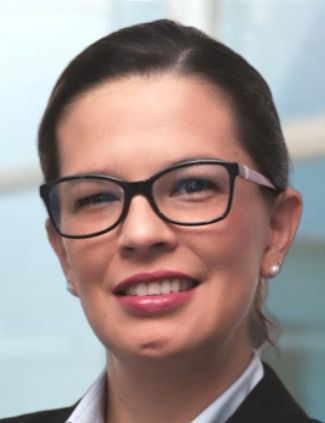
Sucy Wing Ching
President, Junta de Administración Portuaria y de Desarrollo Económico de la Vertiente Atlántica de Costa Rica (JAPDEVA)
Bio
Sucy Wing Ching was born on July 7, 1974, in the province of Limón. She holds an MBA in Business Administration, graduated with honors, and a Bachelor’s degree in Customs Administration from Universidad Metropolitana Castro Carazo. She is a career public servant with 14 years of professional experience, having held various positions including Revenue Professional with a specialty in Customs Management in the Regulatory Department of Limón Customs of the National Customs Service at the Ministry of Finance. She has an extensive and important track record carrying out relevant actions in maintaining an adequate internal control system in Public Administration that promotes trade facilitation and compliance with customs tax obligations, resolving procedures related to customs regimes and their procedures, presented by public service auxiliaries, all in accordance with current regulations. She is a specialist in logistics, port terminals, customs, and foreign trade, knowledge which she has made available to the Limón community by serving as a professor at the University of Costa Rica and the University College of Limón.
“It is extremely
important that we retake that role of Port Authority. The alliances that can be
created with other countries and maritime sectors are strategically
important.”
TBY talks to Sucy Wing Ching, President of the Junta de Administración Portuaria y de Desarrollo Económico de la Vertiente Atlántica de Costa Rica (JAPDEVA), about reorganization, tourism consolidation, and opportunities in Costa Rica.
How would you summarize JAPDEVA’s transformation process and transition following its reorganization?
We have worked on many things to prepare for future challenges. This includes updating tariffs, computer systems, and rethinking and improving our customer service. This has worked strategically. We must not ignore the effects of the El Niño and La Niña weather phenomena, either. What has been low for Panama has been beneficial for us, where tides and vacant port positions allow arrival, docking, loading, and unloading of ships. By having more competitive tariffs and providing the faster, more efficient service that we have been working on, more importers are bringing their ships here. They see us as the best option. Now the country’s major bulk carriers and cargo ships are all arriving here.
What is your perspective on JAPDEVA’s role in attracting foreign investment to Costa Rica as a facilitator of trade and capital inflow?
It is extremely important that we retake that role of Port Authority. The alliances that can be created with other countries and maritime sectors are strategically important. We have good relations with COCATRAM and closeness with CIC and OEA, so all these activities in other countries reinforce those alliances. This type of information exchange is valuable. We must make a change in Costa Rica, starting from mentality. As Port Authority from the Caribbean, JAPDEVA is taking a different approach; we are not only thinking about the Caribbean, but about Costa Rica as a whole. We need to work on a new port master plan that speaks about possibilities for new terminals in the Caribbean and Pacific. We should not just stay with two; we know Costa Rica is growing. There are many opportunities, not only in maritime transport, but also on land; we have Panama on one side and Nicaragua on the other. We can talk about consolidation and merchandise transfer using multimodal transport. At JAPDEVA, we have open arms for all who want port services. We will offer good service and study each case individually to provide preferential treatment. If you are, for example, a pineapple or banana exporter, those are established container tariffs. If are innovative, for example, then gravel export from Costa Rica started in 2024 and is increasing. We always seek to help these clients grow, supporting them and negotiating to the extent legally permitted.
How is JAPDEVA adapting to changing needs of international and local travelers in tourism consolidation?
We have 15 docks, which will be financed with canon funds and are destined for various locations, one or two for each canton. We contribute in this sense to institutions like ICT, supporting municipalities, working with National System of Conservation Areas (SINAC) and the Ministry of Environment and Energy as a team. All this strengthens what will ultimately result in tourism. We also make large investments in asphalt paving. For example, Talamanca is a canton where we just invested almost CRC11 billion in asphalt paving. These types of projects promote not only tourism, but education, health, development, and agriculture. We are also working on a project called the Urban Park, which is strategically located next to Puerto Limón. This tourism development proposal involves creating an entire urban park with a bridge and pier to lift and grow everything and change that neighborhood’s economic dynamic. This can achieve the same effect achieved in Monteverde, where people started migrating because they saw they earned more renting their little houses. We also have the marina and cruise terminal project under a strategic alliance, involving an investment of almost USD850 million. This project would directly or indirectly generate employment for approximately 20,000 people.
What are the main opportunities for Costa Rica and JAPDEVA at the port and logistics level compared to other regions?
Without doubt, expansion and modernization themes are extremely vital. We see ourselves with more spaces, with warehouses, with silos, new equipment, and installed capacity. We are thinking about developing 10-ha of a logistics activities zone. We are already working on territorial planning where we can work as a team with the Costa Rican Institute of Tourism, Ministry of Transportation and Public Works, and others. We see a Caribbean ports master plan. As Port Authority, JAPDEVA cannot be limited; we should focus on growth beyond having two ports. We must grow and be more competitive. The key is having good service and being able to have more specialized concessions for solid bulk themes. Since it is now a multipurpose terminal with solid clients, these clients are now asking for specialized positions, and specialization is increasingly vital.
ADVERTISEMENT
ADVERTISEMENT
You may also be interested in...